Beyond "Black Box" AI: Why Clinical Context is King in Payment Integrity
Mar 25, 2025
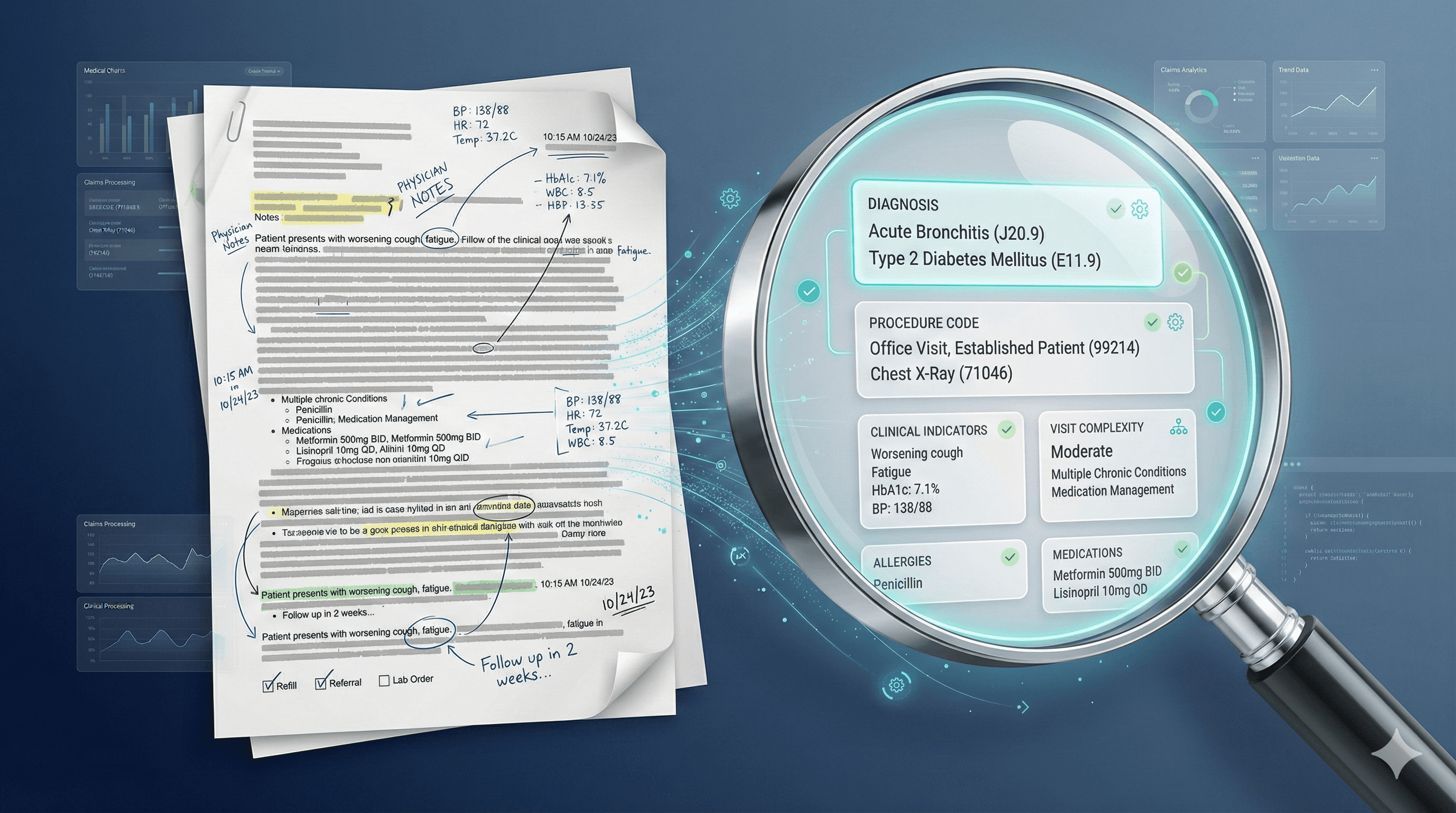
Artificial intelligence has revolutionized claims auditing by processing vast datasets at speeds humans cannot match. Yet for many plan administrators, this technological leap has introduced a new frustration known as the "Black Box" problem. Algorithms flag thousands of potential errors based on statistical anomalies, but they often lack the nuance to understand why a bill looks the way it does. The result is a flood of false positives that antagonize providers and bog down administrative teams. The solution is not to abandon technology. It is to recognize that AI is a tool for detection, not a substitute for judgment.
The Limits of Pure Algorithms
Rules-based engines and machine learning models excel at identifying deviation. They see that a code combination occurs rarely or that a billing pattern does not match the historical norm. However, deviation does not always equal error. A complex patient case might legitimately require a unique combination of services that looks suspicious to a computer but is perfectly appropriate to a doctor. Relying solely on automation turns payment integrity into a volume game. The auditor throws thousands of flags at the provider hoping some stick. This creates high abrasion. Providers eventually stop engaging with the process because they view the requests as baseless administrative harassment.
The Necessity of Clinical Evidence
Context determines the validity of a claim. To judge if a service was billed correctly, an auditor must look beyond the billing header and examine the clinical truth found in the medical records. This is where human expertise remains irreplaceable. An algorithm can spot a high-level Evaluation and Management code that seems expensive for a routine visit. Only a clinician can read the physician’s notes to see if the patient presented with complications that justified the higher intensity of care. Without that evidence, a denial is just a guess.
Turning Detection into Defensible Proof
The most effective payment integrity models function as a filter rather than a firewall. We utilize machine learning to audit 100% of claims to uncover potential upcoding, unbundling, or contract violations. This technology acts as a spotlight that directs attention to where it matters most. Once the system identifies a high-confidence error, the process shifts to clinical validation. Experienced clinicians review the medical records to prove medical necessity with clear evidence. They verify whether the documentation supports the billed codes or if the clinical facts contradict the claim. This workflow eliminates the noise that characterizes legacy audits. Clinicians focus only on impact. They do not waste time on clear-cut approvals or low-probability flags.
Building Trust with Providers
The ultimate value of adding clinical context is the quality of the output. When an auditor approaches a provider with a dispute, the argument cannot rely on a statistical probability score. It must rely on facts. By combining AI speed with human verification, plan sponsors receive explanations they can trust and share. The conversation with the provider changes from a generic argument about billing rules to a specific discussion about clinical documentation. This reduces disputes and ensures that recoveries are tied to actual errors rather than algorithmic misunderstandings.
Recovery on autopilot
Dispute, track, recover, and close overpayments fast
Recovery on autopilot
Dispute, track, recover, and close overpayments fast
Recovery on autopilot
Dispute, track, recover, and close overpayments fast
Recovery on autopilot
Dispute, track, recover, and close overpayments fast
© 2025 Avelis Inc.

© 2025 Avelis Inc.

© 2025 Avelis Inc.

© 2025 Avelis Inc.